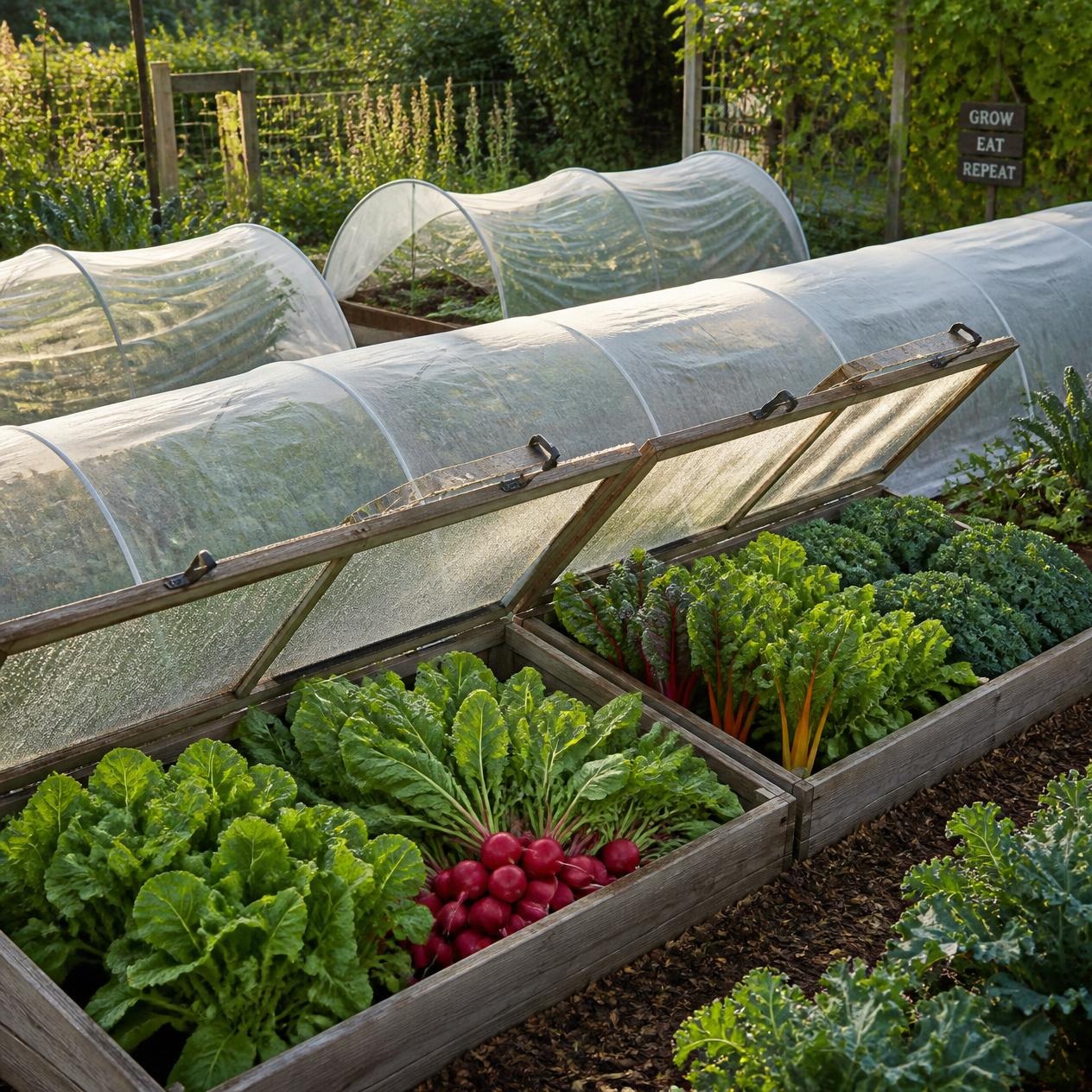
Your Guide to Cold Frames, Row Covers, and Season Extension
Chances are good that you try to wind down your garden by the first frost date every year. However, there’s no reason that you can’t enjoy homegrown veggies for far longer. You just need the right tools and a little know-how. Between cold frames and row covers, it’s pretty easy to extend your growing season by weeks or even months.
What Is a Cold Frame?
A cold frame is really just a box without a bottom and a transparent lid. You can make the box out of wood, cinder block, bales of straw, or just about anything else that holds its shape and offers some insulation. The lid is usually a sheet of old glass (a storm window or door is the classic choice) or clear plastic. You set the whole thing right on the soil in your garden, plant inside it, or transplant seedlings into it. The transparent lid captures solar heat during the day and holds it through the night.
The idea is this: you’re not trying to grow summer crops in winter. You’re growing cold-tolerant crops for longer.
How to Build a Simple Cold Frame
You don’t need to be a carpenter to build something basic. The simplest cold frame you can make uses a single old storm window and four bales of straw. Arrange the bales in a rectangle about the size of the window, set the glass on top at a slight angle so rain and snow slide off, and you’ve got yourself a working cold frame.
If you want something more permanent, build a simple box from untreated lumber (cedar is the longest-lasting choice). Cut the back boards taller than the front so the lid slopes toward the south to catch maximum winter sun. A standard cold frame might be four feet wide (so you can reach the center from either side without stepping in), six to eight feet long, and 12 to 18 inches tall at the back. Attach your glass or polycarbonate lid with hinges so you can prop it open for ventilation.
Placement matters a lot. Site your cold frame against a south-facing wall if you can. The wall absorbs heat during the day and radiates it at night. Orient the long axis east to west so the sloped lid faces south and gets winter sun all day. Skip spots that collect standing water, and opt for a location that’s easy to reach on cold mornings when you’re not all that happy to trudge through the frost.
What Can You Grow in Your Cold Frame?
Not every vegetable works in cold frames.
- Leaf lettuce is the workhorse of the cold frame garden. Varieties bred for the cold can handle temperatures well below freezing under glass and give you leaves through late winter.
- Spinach is another standout. It’s very cold-hardy, and it tastes sweeter after a hard frost. Plant spinach in the cold frame in early October and it’ll reward you for months.
- Kale is already tough, but under a cold frame it becomes near-indestructible. ‘Lacinato’ (also called dinosaur kale or Tuscan kale) and ‘Red Russian’ are both excellent choices.
- Arugula, mâche (also called corn salad or lamb’s lettuce), claytonia, and Asian mustard greens like mizuna and tatsoi all thrive in cold frames through winter.
- Cilantro, parsley, and chervil can also extend well into winter under glass, giving you fresh herbs when every outdoor plant has long since died back.
Managing Your Cold Frame
The biggest mistake first-time cold frame gardeners make is forgetting to ventilate. On a sunny winter day, temperatures inside the frame can spike high enough to stress or even kill your plants. You should probably open the lid partway on any day when outside temperatures climb above 40°F. Prop it open in the morning and close it again in the late afternoon.
Watering is much less frequent than in the summer garden. Plants in cold frames grow slowly in low light and cold temperatures, and the soil stays moist much longer. Check the soil moisture before watering rather than doing it on a schedule.
A thermometer inside the frame is a good idea, too. You want to keep nighttime temperatures above 25°F for most crops, although spinach and mâche can handle a bit colder. If temperatures are supposed to drop well below that, add a layer of frost cloth or old blankets draped over the plants inside the frame before you close the lid.
Harvest regularly. Cut-and-come-again crops like lettuce, arugula, and kale produce better when you harvest from them. Don’t let plants bolt to seed, either.
Row Covers and Low Tunnels
If a cold frame is more than you want to take on right now, row covers and low tunnels offer many of the same benefits with less construction and more flexibility.
- A row cover is exactly what it sounds like: a lightweight, breathable fabric that you drape directly over plants in the garden. A single layer of lightweight cover keeps most cold-hardy greens alive through light frosts. A heavier-weight cover protects down to the mid-20s.
- A low tunnel takes things a step further: you bend flexible hoops over the row and drape row cover over them, creating a tunnel that holds the fabric off the plants and gives them room to grow. The air gap between the fabric and the plants gives you better insulation and prevents frost damage.
Timing Winter Planting
If you read our earlier post on fall planting intervals for Tennessee, you know to count backward from the first frost date. The same thing applies to cold frame plantings, but the math is a little different because you’re trying to get plants to a certain size before the short days of winter slow growth too much.
The target is to have transplants or well-established seedlings in the cold frame by early to mid-October in Middle Tennessee. Growth slows down a lot once you get less than 10 hours of daylight, which happens around the winter solstice.
The best strategy is to start seeds for cold frame crops in August and September and transplant the seedlings into the cold frame in late September or October once they’ve reached a usable size. You can also direct sow into the cold frame in September while temperatures are still warm enough to support good germination.
Make Your Next Season Even Better
If you want to go deeper on cold-weather growing, soil building, and sustainable farming through all four seasons, explore our online classes and in-person classes at the farm. For more about sustainable, year-round growing, our book Dirt Rich is worth your time.
You’ll find ongoing tips and seasonal how-to’s on the Stoney Creek Farm YouTube channel and on Facebook. If you’re building a cold frame this fall or trying row covers for the first time, drop a comment and let us know how it goes.