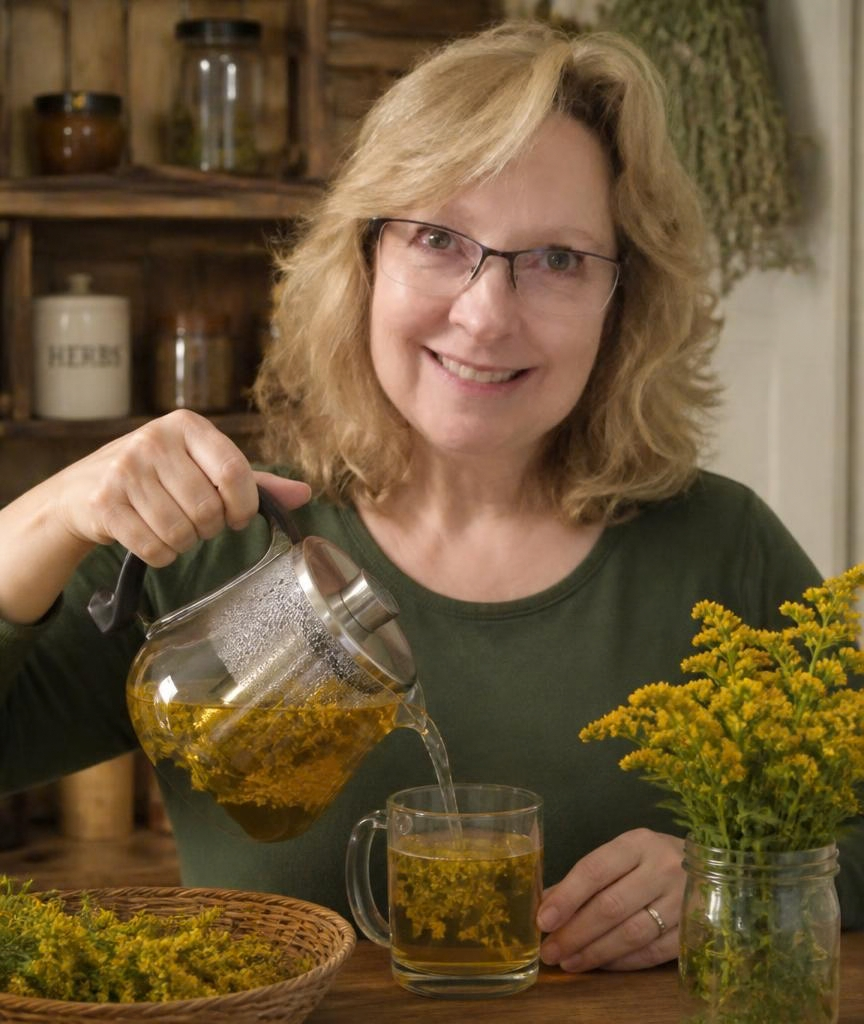
How to Identify, Harvest, and Use Goldenrod
Drive down almost any road in Middle Tennessee, and you’ll see long stretches of brilliant yellow lining the ditches and arching over fence lines. Goldenrod is at its peak right now, and if you’ve been dismissing it as a weed, it’s time to rethink things.
In a previous post, we covered the health benefits of goldenrod, including its anti-inflammatory properties, its benefits for urinary health, and the myth that it causes fall allergies (it doesn’t; that’s ragweed, and they bloom at the same time). However, knowing goldenrod is useful is one thing. Knowing how to find, identify, harvest, and make something with it is something else entirely.
Goldenrod is most potent when the flowers have just opened. Once you’re past peak bloom, the flowers’ medicinal value drops. So, if you’re going to act on this, the time is now.
Goldenrod vs. Ragweed
Before you pick anything, make sure what you’re looking at. Goldenrod and ragweed grow side by side in the same field, blooming at roughly the same time.
Goldenrod (Solidago spp.) has showy, plume-like clusters of small golden-yellow flowers at the top of the stem. The flowers are bright and attract pollinators (on a warm fall day, a goldenrod plant in full bloom is usually covered in bees and butterflies). The stems are upright to arching, and the leaves are alternate, lance-shaped, with lightly toothed edges. The whole plant tends to be two to four feet tall, sometimes taller.
Ragweed (Ambrosia artemisiifolia and related species) is the culprit when it comes to allergies. Its flowers are small, greenish, and don’t stand out very much. They produce clouds of wind-carried pollen and have no reason to attract pollinators. If you look at ragweed up close, the flowers look nothing like goldenrod’s golden plumes. Ragweed leaves are almost fern-like, and very different from goldenrod’s simple lance-shaped leaves.
Identifying Goldenrod in Tennessee
Tennessee has more than two dozen native species of goldenrod. Nearly every goldenrod you encounter in this part of the world is safe to use medicinally. The most common species you’ll find are tall goldenrod (Solidago altissima), wreath goldenrod (Solidago caesia), and sweet goldenrod (Solidago odora).
Sweet goldenrod is worth your time if you can find it, because its flavor makes it a good fit for tea. Crush a leaf and smell it: if you get a licorice or anise smell, you’ve found it. It tends to grow in drier, sandier soil and is a little less common than the tall goldenrod you’ll see everywhere along roadsides, but it’s worth the look.
One important rule: don’t harvest from roadsides or anywhere that might have been sprayed with herbicide or pesticide.
When and How to Harvest
Timing matters more with goldenrod than with most herbs. The best time to harvest is just as the flowers are beginning to open. At this stage, the flowers and leaves have the highest concentration of beneficial compounds.
What you’re harvesting is the top eight to 12 inches of the flowering stem, and it’s the part of the plant you’ll use. Use scissors or pruning shears rather than pulling, and cut just above a leaf node so the plant can continue to grow and flower.
Take no more than a third of any single plant, and spread your harvesting across multiple plants rather than stripping one. Goldenrod is an important late-season food source for pollinators, so harvest with that in mind.
If you’re harvesting to dry for tea, do it in the morning after the dew has dried but before the midday heat. Spread the flowering tops loosely on a clean screen or hang them upside down in small bundles in a warm, dry spot out of direct sunlight. They’ll dry in one to two weeks. Dried goldenrod will keep its color and scent for a year if stored in an airtight glass jar away from heat and light.
Making Goldenrod Tea
Goldenrod tea is the simplest option if you’ve never worked with this plant before. The taste is mild and a little floral. It also blends well with other herbs.
For fresh goldenrod tea:
- Gather a small handful of fresh flowering tops, roughly a quarter cup loosely packed. Bruise them lightly by rolling them between your palms to release the oils.
- Pour eight ounces of just-boiled water over the plant material.
- Cover the cup to trap the volatile compounds.
- Steep for 10 to 15 minutes.
- Strain and drink.
For dried goldenrod tea, use one heaping teaspoon of dried herb per eight ounces of water. Steep covered for 10 to 15 minutes.
A blend of goldenrod, elderflower, and peppermint makes a respiratory and anti-inflammatory tea. Goldenrod and ginger are warming and anti-inflammatory. Add raw honey after steeping, not before, to keep the honey’s own beneficial compounds.
Drink goldenrod tea with plenty of water alongside it. Because it acts as a mild diuretic, it works best when you’re well hydrated (that diuretic action is part of what makes it good for urinary tract support).
Making a Goldenrod Tincture
To make a simple tincture:
- Fill a clean glass jar (a pint mason jar works well) loosely with fresh goldenrod flowering tops, torn or roughly chopped to increase surface area.
- Pour 80-proof vodka over it until everything is submerged and the liquid reaches the top of the jar. (80 proof is 40% alcohol, which is the standard for most fresh herb tinctures.)
- Seal the jar, label it with the herb name and the date, and set it in a cool, dark location.
- Shake the jar daily for the first week or two, then let it sit undisturbed.
- After four to six weeks, strain the plant material out through cheesecloth or a fine mesh strainer, pressing the herb firmly to extract all the liquid.
- Pour the finished tincture into dark glass dropper bottles and store in a cool, dark location.
The standard adult dose for goldenrod tincture is 2 to 4 milliliters (roughly 40 to 80 drops) two to three times per day. As with any herbal supplement, it’s worth consulting a doctor or qualified herbalist before adding it to your routine, especially if you’re on medications or have a health condition.
If you’d prefer to avoid alcohol, substitute food-grade vegetable glycerin for the vodka.
Goldenrod-Infused Honey and Oil
Beyond teas and tinctures, there are a couple of other goldenrod uses worth your time.
Goldenrod honey is a delicious way to use this plant.
- Pack fresh or lightly wilted goldenrod flowering tops into a jar.
- Cover completely with raw local honey.
- Seal it and let it infuse at room temperature for two to four weeks.
The honey draws the plant’s beneficial compounds into itself through osmosis and takes on a floral, slightly herbal quality. Use a fork or skewer to stir daily for the first week to prevent air pockets. Strain if you prefer, or leave the plant material in and spoon around it.
You can massage goldenrod-infused oil into sore joints or tense muscles. Use dried rather than fresh goldenrod for oil infusions, because any residual moisture in fresh plant material can cause the oil to go rancid.
- Fill a clean jar with dried goldenrod.
- Cover with a carrier oil (olive oil is traditional, but jojoba and sweet almond are also good choices).
- Let it infuse in a warm location.
- Strain and store in a dark glass bottle.
- Use within six to 12 months.
Keep Learning All Year Long
If you want to go deeper in working with wild and cultivated herbs, our online classes cover sustainable growing, herbalism, and whole-farm living in depth. In-person classes at the farm are another option, and this fall, we’re offering Southern Sourdough classes, where you’ll learn fermentation principles that apply to everything from wild yeast bread to fermented foods.
The farm store is open from daylight to sunset on the back porch (fresh eggs, sourdough bread, cinnamon rolls, and honey, including local raw honey that pairs beautifully with a goldenrod infusion). Follow along on the Stoney Creek Farm YouTube channel and on Facebook for seasonal tips and behind-the-scenes content. And if you want the foundation underneath everything, make sure to pick up our book, Dirt Rich. Drop a comment and tell us what you’re making with your goldenrod harvest this year!