Easy Homestead Projects That Can Jump-Start Your Sustainable Life
Nobody builds a sustainable homestead all at once. That’s not how it works, and not how it should work. People who try to do everything in year one usually end up overwhelmed, with half-finished projects, and ready to quit. The ones who are still at it a decade later started with one thing, then another.
So, if you’ve been looking at all of it and don’t know where to begin, the answer is that it doesn’t matter much which project you start with. It matters more that you start with something you’ll actually finish.
What follows is a curated set of projects that make sense for where you are in the sustainable living journey. Some you can do this weekend, while others are season-long investments, but all connect to the bigger picture: living closer to the land and building real skills.
Compost and Soil
If there’s a single project that underpins everything else in a sustainable homestead, it’s composting. Compost is where food scraps, garden trimmings, dried leaves, and coffee grounds turn into the richest soil amendment you can put on a garden bed. And unlike most things in life, it works even when you do it badly.
A simple three-bin system (fresh material, actively composting, finished compost) is the most efficient setup for most people, but a single pile or a compost tumbler works, too. The rule of thumb is to use two parts brown (carbon, like dried leaves or cardboard) to 1 part green (nitrogen, like grass clippings or kitchen waste).
Pair composting with a raised bed built from untreated lumber, filled with a blend of topsoil and your finished compost, and you’ve got a great start for almost everything else in this post. Even one 4 x 8-foot bed is enough to grow a surprising amount of food.
The Kitchen
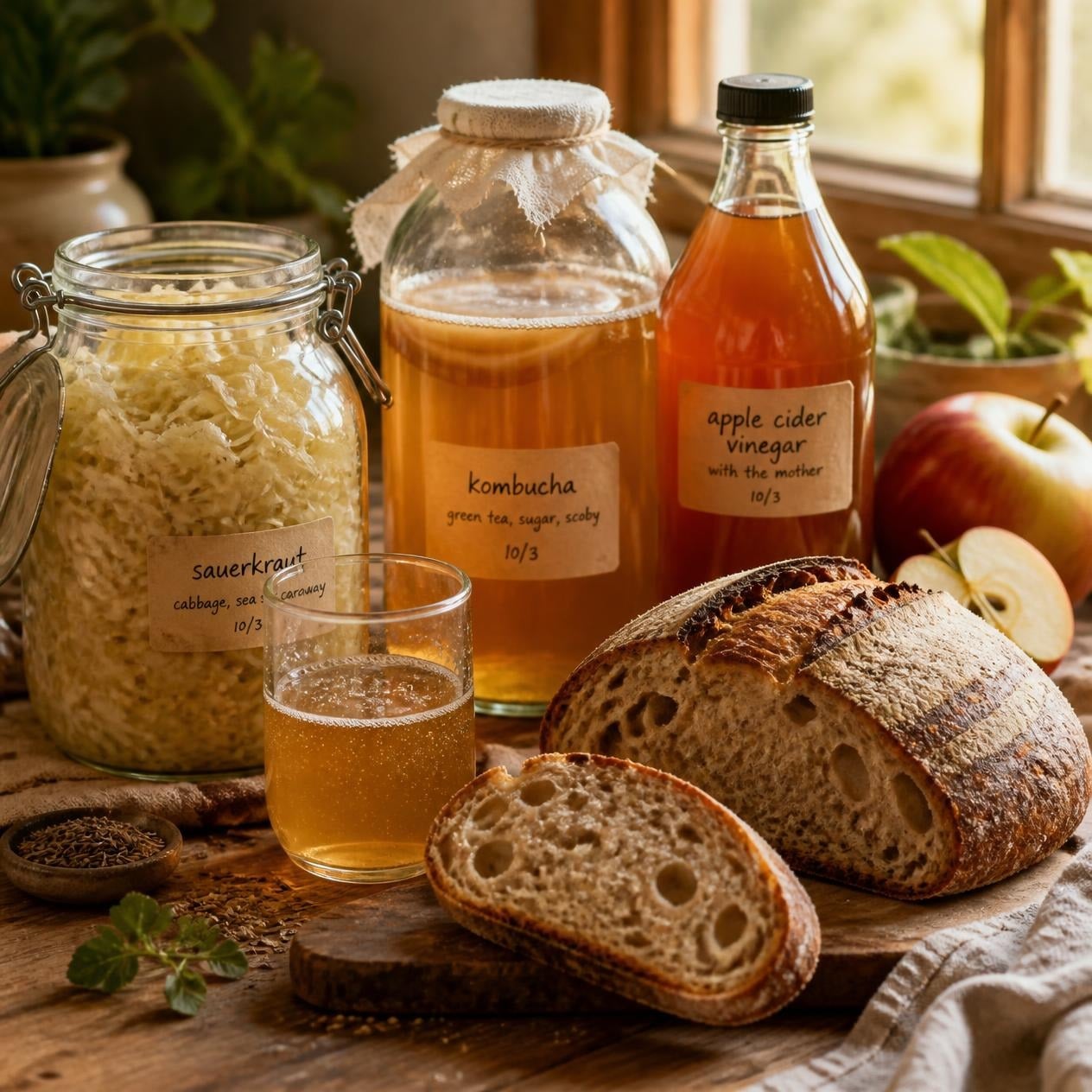
Learning to make something from scratch changes your relationship to food. Sourdough bread is the project we’d put at the top of this list for almost anyone. A sourdough starter is just flour and water, fermented with wild yeasts that are already in your kitchen and your environment. It costs almost nothing to make (beyond what you pay for flour). However, the bread it produces is different from anything you can buy (even so-called sourdough at the grocery store). Once you understand sourdough fermentation, you start to understand fermentation in a broader context: sauerkraut, kimchi, kombucha, and even the soil in your garden.
Making sourdough does take some practice. There’s a feel to it that’s hard to learn from a recipe by itself. Our Southern Sourdough classes give you a hands-on day where you go home with a starter that you know how to maintain, as well as the knowledge to make your own loaf.
Beyond sourdough, the fermentation world opens up fast.
- Sauerkraut is shredded cabbage, salt, and time. It takes about 15 minutes to prepare and makes itself from there.
- Kombucha starts with a SCOBY and sweet tea and gives you a fizzy, probiotic drink you can flavor however you like.
- Apple cider vinegar made from kitchen scraps is another low-cost, high-return project that uses something you’d otherwise throw away.
Canning is in this same category.
- Water bath canning handles high-acid foods: tomatoes, pickles, jams, salsa, apple butter. A water bath canner and a case of mason jars will pay for themselves in the first season.
- Pressure canning extends what you can do to low-acid foods like green beans, corn, and more.
We’ve covered both methods in depth on the blog if you’re new to canning.
Herbs, Berries, and Seeds
An herb garden is one of the easiest garden projects to start and one of the fastest to reward you. A sunny windowsill can support basil, parsley, and cilantro indoors year-round. A raised bed or a dedicated patch outside can hold thyme, oregano, rosemary, sage, and mint, and once established, these plants ask almost nothing from you. Dry the summer excess, and you’ll have your own dried herbs through winter, far better than anything that comes in a grocery store jar.
Add medicinal herbs to the mix (echinacea, calendula, chamomile, lemon balm, goldenrod), and your herb garden becomes an apothecary with herbs you can turn into teas, tinctures, and salves.
A berry patch is a longer-term project, but one of the highest-return investments you can make.
- Blackberries and raspberries grow fast, and they’re forgiving. Plant them against a fence, and they handle themselves once established.
- Blueberries take a few years to hit full production but live for decades.
- Strawberries spread quickly and can fill a raised bed in a season.
Seed saving is another great option. Letting some of your open-pollinated vegetables and herbs go to seed at the end of the season gives you next year’s seed supply at no cost.
Tomatoes, beans, squash, lettuce, and most herbs are good candidates. Save seeds by drying them completely and storing them in a labeled glass jar in a cool, dark location. Most seeds can be air-dried, including tomato seeds. However, if you want your tomato seed supply to last more than a year or two, you can ferment them first.
If you want to keep harvesting through fall and winter, a cold frame is what you need. We covered cold frames and row covers in depth in a recent post. Spinach, lettuce, kale, arugula, and mâche all thrive under glass in the cold months.
Rainwater and More
Rainwater collection sounds more complicated than it is. A 55-gallon food-grade barrel under a downspout, fitted with a spigot, gives you free water for the garden that would otherwise run off your roof and into the storm drain. In an average year, a single roof downspout can fill a barrel multiple times a week during rainy seasons. Connect two or three barrels, and you’ve got a pretty decent reserve.
The setup requires a barrel (you can get these free or cheap from food manufacturers and feed stores), a downspout diverter, a spigot, and an overflow hose routed away from the foundation. Connect the spigot to a soaker hose or drip line, and you’ve got gravity-fed irrigation for the beds nearby.
A Word About Power for Your Projects
Some outdoor projects are best done with portable power when you’re working away from an outlet. If you’re using a corded drill or a circular saw, it needs power, and running extension cords across a yard is a pain at best.
Olin put together a guide to portable power options we use here at Stoney Creek Farm that’s worth reading before you invest in a unit. The right choice depends on what you’ll actually be running and how far you need to go from the house. His breakdown covers the Honda EU2200i, the Jackery Explorer 2000 Pro, and the Bluetti AC200P.
Learning Is the Key to a Sustainable Life
Every project in this post connects to skills you can learn or go deeper on here at Stoney Creek Farm. If sourdough is your starting point, the Southern Sourdough classes offer a hands-on day that will get you there faster than any recipe can. Check the events calendar for upcoming dates. For soil health, canning, fermentation, herbalism, and the broader practice of sustainable growing, our online classes let you learn at your own pace from wherever you are.
Follow along with the farm on YouTube and Facebook for seasonal tips and farm updates. If you want the philosophy underneath all of it our book Dirt Rich is the place to start. Drop a comment below and tell us which project you’re taking on first.