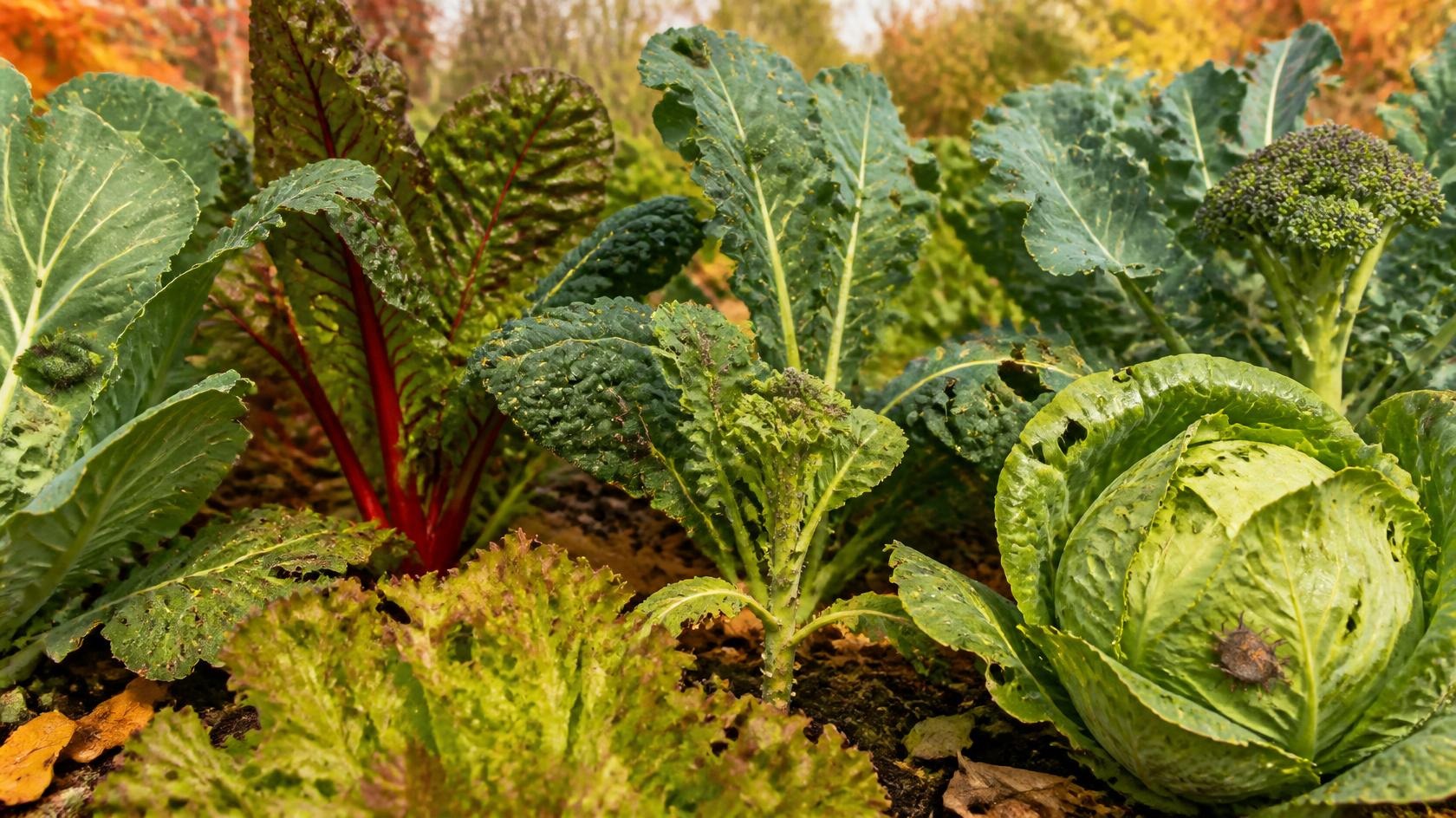
How to Identify and Handle the Most Common Fall Garden Pests in Tennessee
If you’ve been gardening long enough, you know Fall pests are pretty different from what eats your veggies in spring or summer. Some pests get more aggressive as temperatures drop and they’re searching for food before winter. Others move in from surrounding areas as wild plants die back. And the fall crops like broccoli and cabbage attract a whole different set of insects than your tomatoes and peppers.
We’ve already written about plants that naturally repel fall pests (check out our companion planting guide if you haven’t read it yet). However, knowing which plants to grow as companions is just half the picture. The other part is knowing what you’re actually dealing with.
A quick note before we dive in; the goal isn’t to kill every insect. It’s to keep pest populations at a level where your crops can still produce. A few aphids on a kale plant aren’t a crisis, but a kale plant stripped to its stem by caterpillars is.
Cabbage Worms and Cabbage Loopers
If you’re growing kale, broccoli, Brussels sprouts, cabbage, or cauliflower, cabbage worms are almost guaranteed to show up. There are two main culprits: the imported cabbageworm (the larva of the small white butterfly you see fluttering around the garden) and the cabbage looper (the larva of a brown moth). Both are green caterpillars that blend into the leaves almost perfectly, which is why you often notice the damage before you notice the pest.
The damage looks like ragged holes chewed through the leaves. In heavy infestations, a plant can be skeletonized surprisingly fast. Check the undersides of leaves for clusters of small yellow eggs, which are the easiest stage to manage before the caterpillars hatch.
The most effective organic control is Bt (Bacillus thuringiensis), which kills caterpillars when they eat treated leaves. It’s harmless to humans, pets, birds, and beneficial insects, and it’s approved for organic use. Apply it to the tops and undersides of leaves every week or so, and after rain, since it washes off. You can also go with a row cover to prevent the moths from laying eggs in the first place.
Aphids
Aphids are a year-round garden pest, but fall kale and collards tend to attract cabbage aphids. These are small, gray-green, and live in dense colonies on the undersides of leaves and in the folds of developing heads. They feed by sucking plant sap, which causes leaves to curl and yellow.
The good news is that aphids have a lot of natural enemies. Ladybugs, lacewings, and parasitic wasps can all help keep them under control (although you can’t use pesticides that hurt beneficial insects). Planting flowers like calendula, dill, fennel, and alyssum near your fall crops can attract the bugs you want.
For active infestations, a strong spray of water from a garden hose knocks off aphids and doesn’t hurt beneficial insects. Insecticidal soap spray is another option. Spray it on the aphids and the undersides of leaves where they cluster. Repeat every few days until the population drops. Don’t spray in full sun or on stressed plants, because the soap can cause leaf burn.
Brown Marmorated Stink Bugs
Brown marmorated stink bugs are a major problem for gardens and farms across Tennessee and much of the eastern US. They’re shield-shaped, about the size of a dime, with a mottled brown pattern and a banded edge on the abdomen. They feed on almost anything, including tomatoes, peppers, beans, apples, and peaches by piercing the skin and sucking the juice, which causes damage to fruit and pitting on vegetables.
They’re hardest to deal with in fall because they’re actively feeding to build reserves before winter, and they’re also looking for somewhere warm, which often means your house. The horde of bugs you see in the garden in September and October is the same one that ends up clustering on the sunny side of your walls in November.
Another problem is that you’ve got limited options to deal with stink bugs. Kaolin clay can reduce damage and is approved for organic use. Row covers help protect crops but have to be removed for pollination. Trap crops can help, too.
Slugs
Slugs love the cool, moist fall days in Tennessee. They’re nocturnal and hide during the day under boards, mulch, and debris, which is why you often see the damage without seeing the pest. One telltale sign is the silvery slime trail they leave behind.
Eliminating some of their hiding places helps. Clear away debris and dead plant material from the garden in fall, and pull mulch back a few inches from the base of plants. If you use boards or other cover items in the garden, check underneath them in the morning and kill any slugs you find.
Diatomaceous earth (DE) can help block slugs if you sprinkle it around plants, but you’ll need to do it again after it rains. Beer traps also work well: sink a shallow container to ground level, fill it with cheap beer. Slugs are attracted to it and drown. Iron phosphate slug bait (sold under brand names like Sluggo) works too, is safe for pets and wildlife, and is approved for organic use. Skip the metaldehyde-based slug baits, because they’re toxic.
Deer and Voles
Not all fall pests are small. Deer can decimate a garden overnight. They’re most likely to move into gardens in late fall and early winter when wild food sources diminish. Voles tunnel under the soil and chew through plant roots and bulbs. Both get more problematic as cold weather sets in.
For deer, you’ll need a fence at least eight feet tall, or a double fence (two shorter fences spaced four or five feet apart). Motion-activated lights are short-term solutions, because deer learn to ignore them.
For voles, hardware cloth laid under raised beds keeps them from tunneling from below. Snap traps baited with peanut butter can also work pretty well. You can also focus on attracting predators. Owls and hawks are the most effective natural predators of voles; installing a barn owl box on the property is a great idea.
Healthy Soil and a Diverse Garden Are Your Best Long-Term Defenses
The best way to approach fall garden pest management is to plan for it early by creating healthy soil, planting a lot of different things, adding in the right companion plants, and attracting beneficial insects. These aren’t quick fixes, but they reduce your workload a lot over time.
Learn More
Sustainable pest management is just one piece of a larger approach to gardening that works with nature rather than against it. If you want to go deeper, our online classes are a great place to start. You can also opt for in-person classes at the farm that give you the chance to see how things really work on the ground. We also recommend picking up a copy of our book Dirt Rich to learn the basics.
For ongoing tips through the season, follow Stoney Creek Farm on YouTube and Facebook. If you’re dealing with a specific pest this fall that we didn’t cover here, drop a comment. We’d love to help you!