How to Identify and Control Squash Bugs and Cucumber Beetles Before They Destroy Your Garden
Gardening means dealing with pests. After all, if nothing’s eating your garden, then it’s not part of the ecosystem. That said, there are pests, and then there are pests.
Most insects that visit your vegetable beds are doing minor damage at worst. However, squash bugs and cucumber beetles are something else entirely. Left unchecked, either one can take out an entire crop in a matter of days (yes, you read that right).
Understanding these two pests is one of the most important things for a gardener, especially in Tennessee and the wider Southeast, where our warm, humid summers are exactly the conditions both thrive in.
Squash Bugs
The squash bug is a flat, gray-brown shield-shaped insect about the size of your thumbnail. It looks a lot like a stink bug, and they’re easy to miss. Squash bugs overwinter as adults in garden debris and emerge in late spring and early summer to feed and lay eggs. The adults and nymphs both feed by piercing plant tissue and sucking out the sap. A few bugs cause a few yellow spots on the leaves. A colony causes rapid wilting, followed by plant death. They can also carry a bacterial disease called yellow vine decline that kills plants even faster than the feeding alone.
The eggs are what you want to find first. Look on the undersides of squash and zucchini leaves for small, coppery-bronze clusters arranged in neat rows or diamond patterns along the veins. They’re easy to scrape off with a fingernail or piece of tape before they hatch.
Nymphs are pale gray-green with black legs and cluster together on stems and leaf undersides. Adults are dark brown or gray with orange and brown markings along the abdomen.
How to Control Squash Bugs without Chemicals
The goal with squash bugs is control rather than eradication. Egg removal is your first and most important line of defense. Check the undersides of your squash, zucchini, and pumpkin leaves at least twice a week from June onward. When you find egg clusters, scrape them off and drop them in a bucket of soapy water.
Hand-picking adults and nymphs is tedious but effective. In the early morning, squash bugs are sluggish and slower to escape. Wear gloves to protect against their stinky spray, and drop what you find into soapy water.
You can also use a trap board. Squash bugs take shelter at night and will congregate under a board, a piece of cardboard, or a folded newspaper laid near the base of the plants. Check it each morning, collect what’s hiding underneath, and drop them in soapy water.
Row covers can also help prevent squash bugs. You’ll need to remove it once the plants start flowering so pollinators can access the blooms, but those first weeks of protection can make a significant difference.
Clean up garden debris as soon as you can. Squash bugs overwinter in plant material. Don’t give them a place to hide by leaving old vines and leaves in the beds.
Cucumber Beetles
The cucumber beetle is even more destructive than the squash bug, not because of the feeding damage itself, but because of what it carries.
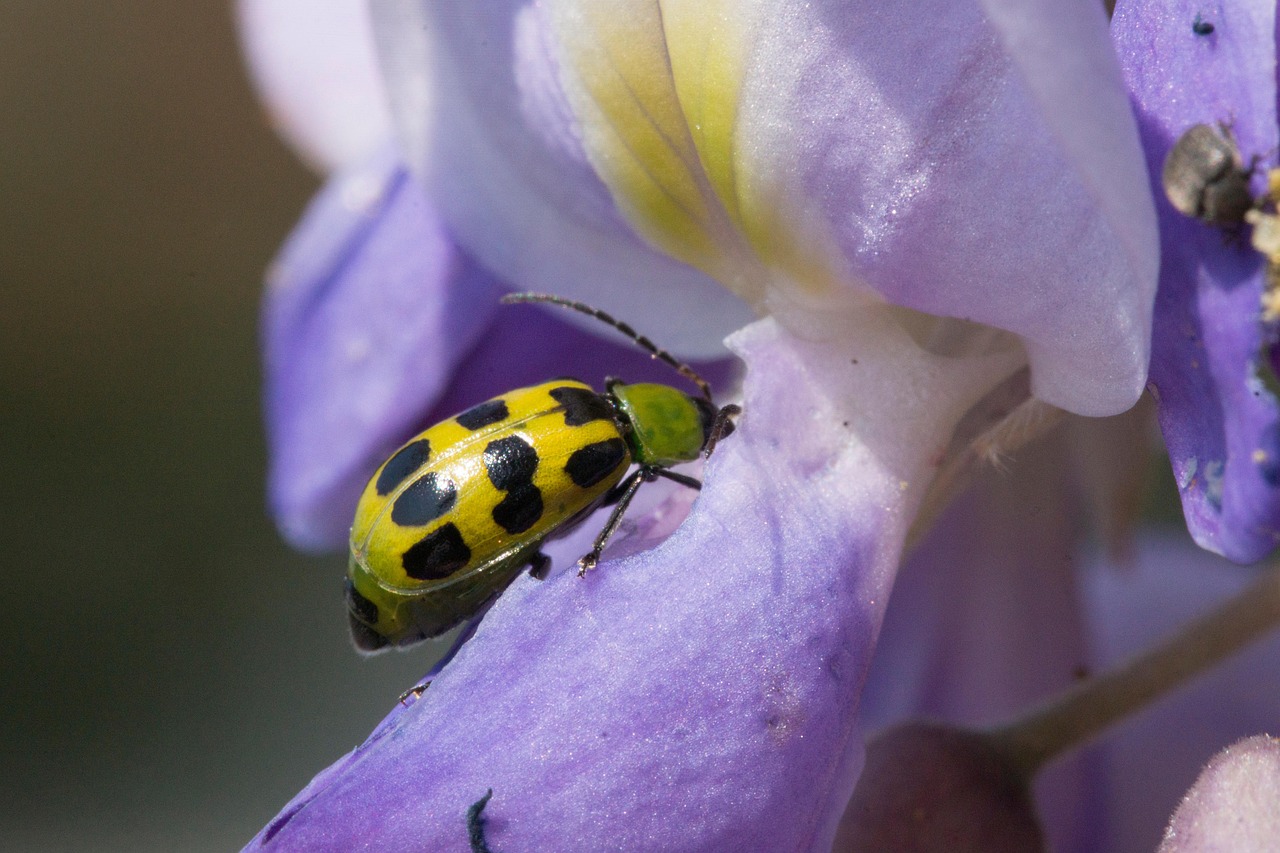
There are two species you’ll find in Tennessee: the striped cucumber beetle, which is yellow-green with three black stripes running down its back, and the spotted cucumber beetle, which is yellow-green with 12 black spots. Both attack cucumbers, squash, melons, pumpkins, and beans, but the striped beetle is the primary vector of bacterial wilt.
Bacterial wilt overwinters in the digestive tract of the cucumber beetle. When the beetle feeds on a plant and leaves behind frass, the bacteria enter through feeding wounds, colonize the vascular system, and block the plant’s ability to move water. The result is a rapid wilt (within days) that doesn’t get better with watering.
Once a plant has bacterial wilt, there’s no treatment, and the plant needs to come out fast before the beetles that infected it move on to your other cucurbits.
To test for bacterial wilt: cut a wilted stem near the base and hold the two cut ends together briefly, then pull them apart slowly. If you see thin, thread-like strands connecting the two pieces as they separate, you’re looking at bacterial wilt. Pull the plant and get rid of it (not in your compost pile).
How to Control Cucumber Beetles without Chemicals
Row covers are the most effective way to prevent cucumber beetle damage. Cover the plants at transplant or germination and leave them in place until flowering. This blocks the beetles and bacterial wilt before the plants are established.
Hand-picking in the early morning works here, too. Cucumber beetles are sluggish when it’s cool. Check the undersides of leaves, the base of stems, and inside flowers once the plants are blooming.
Kaolin clay (Surround WP) is a fine white mineral powder that you mix with water and spray on the foliage. It creates a physical barrier against feeding and egg-laying. It washes off with rain, so you’ll need to reapply it.
Trap cropping with Blue Hubbard squash can also work. Cucumber beetles find Blue Hubbard irresistible. Plant a few at the perimeter of your garden as sacrificial trap crops, then catch and destroy the beetles.
Don’t Let the Harvest Go to Waste
If you’re managing your garden well and the cucurbits are producing, you’re going to have more squash, cucumbers, and beans than your family can eat fresh. That’s the goal, but it means you need a plan for preservation.
Our Canning 101 class on Saturday, June 13th, will give you all the information you need to put that harvest away. We’ll walk you through pressure canning for low-acid vegetables, water bath canning for pickles, tomatoes, and jams, and blanching for the freezer. The full class takes two hours, and we’ll provide all the supplies and instructions. The class is $45, runs from 10 AM to noon here at Stoney Creek Farm in Franklin, and space is limited.
Don’t Let Insect Invaders Destroy Your Crops
Squash bugs and cucumber beetles are real threats, but they’re manageable ones. Check your plants frequently, remove eggs before they hatch, use row covers early in the season, and know the signs of bacterial wilt so you can act fast when you see it.
You’ve put the work into getting your garden going. These pests don’t have to take what you’ve built. Stay ahead of them, and the harvest will be yours.