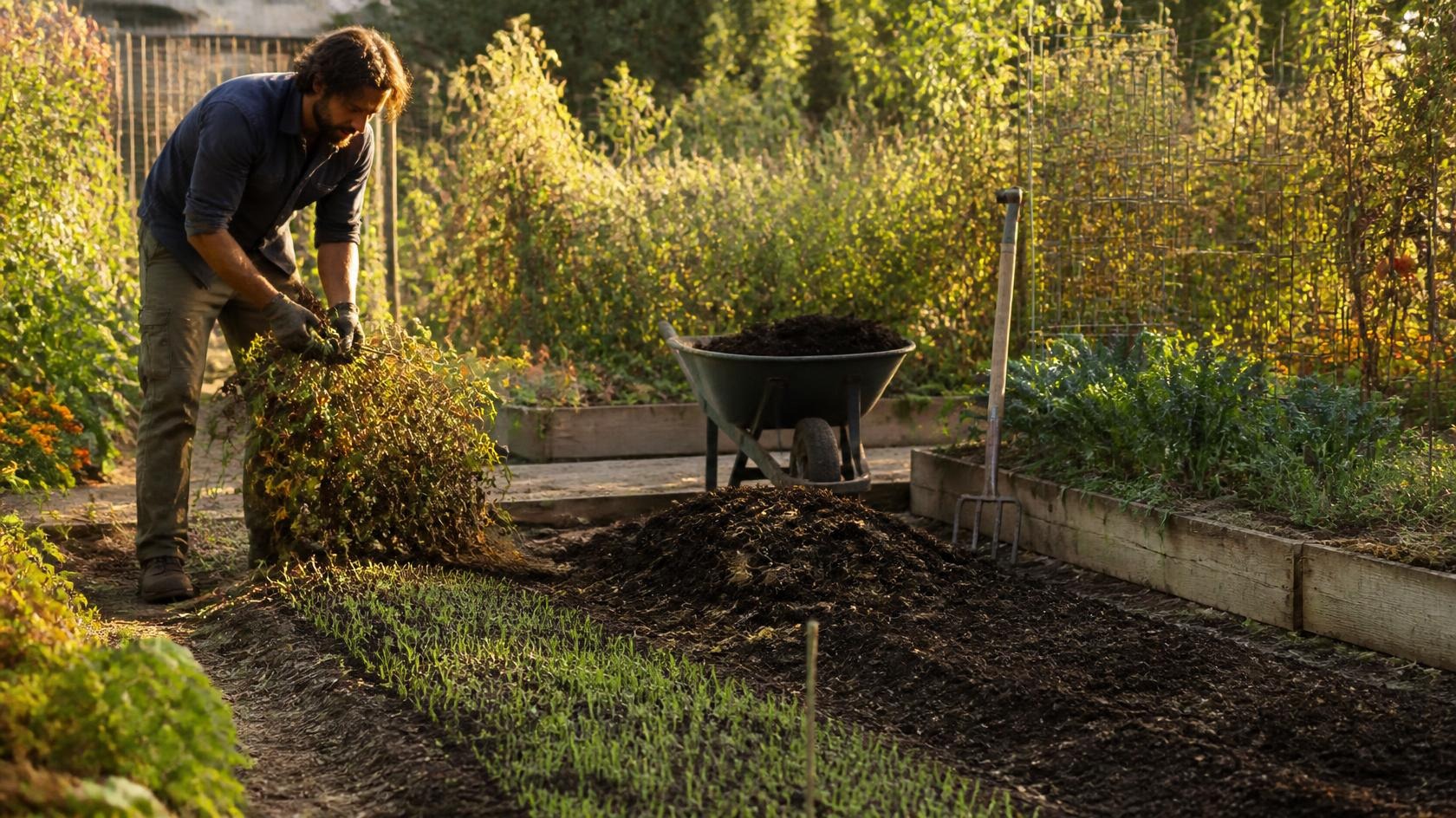
Closing Down the Garden Right
By the time October hits, chances are good that you’re happy but pretty tired. After months of planting, watering, weeding, harvesting, canning, and drying, it’s time to let the garden (and you!) rest. However, you can’t just say, “I’m done”, at least not if you want to avoid some serious problems next season (think pests and diseases). Getting your garden closed down right can make a big difference in your results come next spring.
Start with a Walk-Through
Before you pull a single plant, walk the garden and look at what’s there. Not everything needs to come out right away, and not everything that needs to come out should be composted.
Here’s what to look for:
- Plants that are clearly finished and spent
- Plants that showed signs of disease or heavy pest pressure during the season
- Plants that are still producing or still have life in them
- Perennial plants that need to be cut back rather than pulled
Don’t try to handle them the same way. A tomato plant that produced all summer and died back on its own is very different from one that struggled with blight.
Pulling Spent Crops
Annual vegetables that have finished producing should come out at the root. This includes tomatoes, peppers, eggplant, squash, cucumbers, beans, and any other summer crops that are fully done. Don’t just cut the stem at soil level; pull the whole plant, roots and all. Leaving roots behind can let pathogens and insects survive over winter.
Shake excess soil from the roots before adding plants to your compost pile or garden cart. Most of that soil belongs back in the bed.
Large vine crops can leave a lot of plant material behind. If you’re short on compost space, chop the vines into shorter sections before composting. They’ll break down faster in smaller pieces. Skip composting any vine material that shows signs of powdery mildew (a fungal disease that survives on infected plant tissue).
What Goes in the Compost Pile?
Not everything that comes out of the garden belongs in the compost bin. A hot compost pile (internal temperatures of 140 to 160°F) will kill most pathogens and weed seeds, but most home compost piles don’t reliably hit those temps across the entire pile.
If a plant looked healthy and produced well, it’s probably safe to compost. If a plant was diseased, pull it and either bag it for yard waste pickup or burn it if burning is allowed in your area. Don’t compost it and don’t till it in, because the disease overwinters in infected tissue and comes back next year.
Weeds are another judgment call. Annual weeds that haven’t gone to seed are fine to compost. However, perennial weed roots can survive composting and regenerate in your garden beds when you spread the compost. Any weed that has already set seed should not be composted, unless you’re 100% sure your pile gets consistently hot enough to kill them.
Dealing with Disease and Pest-Infested Plant Material
Composting aside, you also need to worry about some disease and pest-related topics.
Squash vine borer eggs overwinter in the soil around squash plants. Removing the plants and loosening the surrounding soil lets the cold and predators get at the larvae.
Tomato hornworms overwinter just below the soil surface. A light tilling after you remove tomato plants brings them up where birds can find them.
Colorado potato beetle adults overwinter in garden debris and leaf litter. Clearing this material out reduces the population (but it can also eliminate habitats for native insects, so be judicious).
Japanese beetle grubs overwinter deep in the lawn and surrounding turf, not usually in the garden bed itself, but the adults laid their eggs near where they fed, so cleaning up debris that could provide overwintering cover near your garden perimeter helps.
For any crop that suffered heavy aphid or whitefly pressure, remove and bag the plant material rather than composting it.
The most important step for most Tennessee gardeners is removing all tomato and pepper debris from the garden. Early blight, late blight, and septoria leaf spot all overwinter in infected leaf and stem material and can hang around in the soil.
Clearing Garden Architecture
Once the plants are out, it’s a lot easier to deal with tomato cages, stakes, trellis netting, row cover hoops, and any other support structures that have been in the garden all season.
Clean metal cages and stakes before storing them. A dip in a water/bleach solution kills spores and bacteria that can overwinter on metal and reinfect next year’s plants. Bamboo stakes and wood stakes should also be cleaned before you put them away.
Trellis netting is worth evaluating. If it held a healthy crop all season, clean it and save it. If it held a diseased crop, it may be harboring pathogens in the mesh, and a new piece of netting next season is cheaper than risking a repeat infection.
Cutting Back Perennials
Perennial herbs get cut back, but the question is how far. Most benefit from a moderate cut in fall (spent flower stalks and leggy growth but leave several inches of stem above the crown), which protects the crown through winter while keeping the plant tidy and preventing dead growth from harboring disease. Lavender doesn’t like to be cut back heavily in fall; hard pruning in late fall can kill it. Save heavy lavender pruning for early spring. Perennial vegetables get cut back to the ground in late fall after the first frost has knocked back the foliage.
One Final Look at the Soil
Once the beds are cleared, you’re set up for soil prep work. If you haven’t already, this is the time to plant cover crops on in-ground beds or lay down the first layer of a lasagna garden on raised beds. Both improve your soil over winter without you having to do any work.
Remember, don’t leave your beds bare over winter if you can help it. Bare soil erodes, loses nutrients, and gets taken over by weeds. A cover crop or a layer of mulch costs you very little now and pays off big come spring.
Digging Deeper
If you want to build on what you’ve done this season and go into next year with a more intentional approach, check out the online classes. We also host in-person classes at the farm where you can get your hands right into the dirt. And speaking of dirt, our book Dirt Rich is a great place to start learning about soil health and a lot more.
Follow Stoney Creek Farm on YouTube and Facebook for tips through the fall and winter. If you’ve got questions about what to do with a specific plant or a specific pest situation at the end of your season, drop them in the comments!