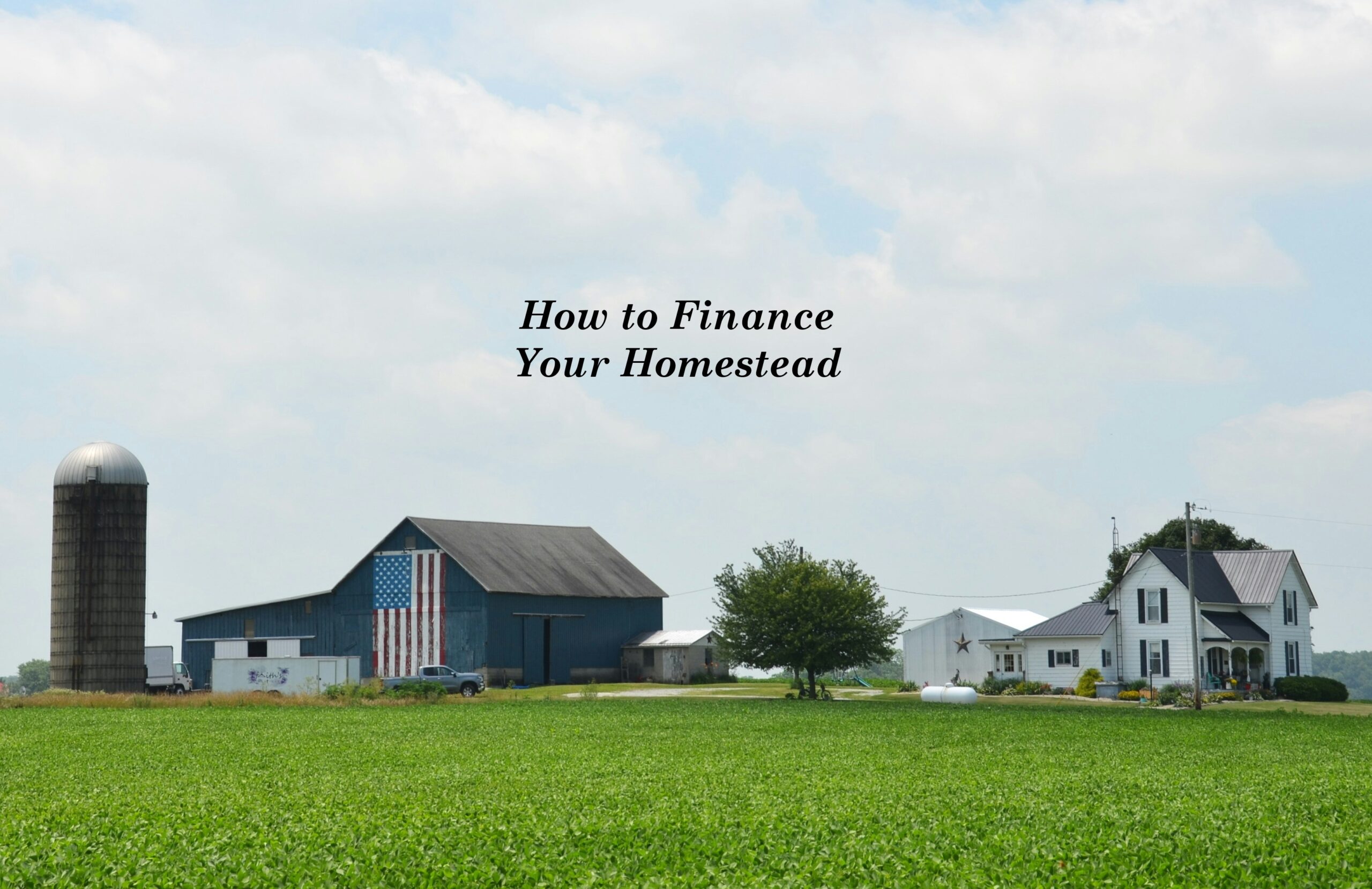
How to Get Your Homestead Started: A Beginner’s Guide to Farm Loans
When Olin and I were dreaming about starting Stoney Creek Farm, the land was what felt most out of reach. We didn’t have a good picture of how working farm families actually finance the land underneath everything they’re building. We definitely weren’t alone. So many people who dream of a homestead get stalled at the financing question. I want to give you a better picture of what’s actually out there in terms of financing help.
Know What You’re Borrowing For
Before you do anything, be clear about what the money’s for. Farm financing is not one-size-fits-all. The loan type should match your purpose, and lenders will want to know exactly what you’re planning. The main categories are:
- Land purchase: buying the property itself. This is usually a long-term loan (20 to 40 years) with a fixed or variable rate, with the land as collateral. Down payment requirements vary but usually fall between 5% and 20% depending on the loan program.
- Farm operating costs: seeds, feed, equipment repair, hired labor, annual living expenses during the startup years. These are shorter-term loans (one to seven years) used to cover the costs of running the operation while you work toward generating a profit.
- Equipment and improvements: tractors, outbuildings, fencing, irrigation systems, greenhouse structures. These can be financed separately from land, often with the equipment itself as collateral.
- Livestock: purchasing breeding stock, feeder animals, or poultry to start or expand a livestock operation.
Understanding which category your needs fall into (and it may be more than one) helps you match the right loan product to your situation before you walk into a lender’s office.
USDA Farm Service Agency Loans
If you’re a first-time or beginning farmer, the USDA Farm Service Agency (FSA) should be one of your first stops. The FSA exists specifically to help farmers who can’t yet qualify for conventional commercial credit, which describes a lot of people starting out. It also offers some of the most favorable loan terms available anywhere. Use the Loan Assistance Tool to check your eligibility and find the right programs for your situation.
Here’s what FSA offers:
Farm Ownership Loans give you up to $600,000 to buy or expand a farm, pay closing costs, construct or improve buildings, and protect soil and water resources. This is probably the loan you’ll want for buying land. FSA also offers a Down Payment Farm Ownership loan for beginning farmers that comes with only a 5% down payment from you, with FSA covering up to 45% and a commercial lender covering the remaining 50%.
Farm Operating Loans give you up to $400,000 for livestock, seed, equipment, farm chemicals, insurance, and operating costs, including family living expenses while the farm gets established.
Microloans are also an option, and they come with less paperwork and more flexible eligibility requirements, but they’re designed for smaller and beginning operations, non-traditional farms, and specialty producers (like homesteads).
Guaranteed Loans use a different structure. Here, a commercial lender makes the loan, and USDA backs it, giving you better terms. FSA Guaranteed Loans go up to $2.24 million for larger operations.
Beginning farmer status is a good thing, too, because it gives you priority access to FSA direct loan funding. Your local USDA Service Center is where you apply.
Farm Credit Mid-America
Before we paid off Stoney Creek Farm, Farm Credit Mid-America was our land lender. I can speak to their professionalism firsthand, and I can tell you that the experience was straightforward. We highly recommend them.
Farm Credit Mid-America is not a bank, though. It’s a customer-owned lending co-op. As a cooperative, it’s owned by its borrower-members, which means the people it serves have a stake in how it works. Over the last 10 years, the organization has returned more than $1.75 billion to its customers through its Patronage program, meaning eligible borrowers have gotten money back just for being customers.
FCMA serves all counties in Tennessee, which makes it a great choice for anyone building a homestead here. You’ll find loan options for everything you need, from Farm Real Estate Loans for purchasing land to Operating Loans for annual farm expenses, Farm Improvement Loans for grain bins, buildings, fencing, and field work, Livestock Loans, Equipment Financing, and even Family Need Loans for personal expenses.
Beginning homesteaders should consider the Growing Forward program, which is designed to cut out some of the hurdles that new farmers face. If you’re buying your first piece of land, ask specifically about it.
AcreCompass
Before you choose a lender, do a little comparison. AcreCompass is an independent comparison site that puts FSA direct loans, Farm Credit associations, and commercial lenders side by side so you can see rates, loan limits, and approval timelines in one place.
AcreCompass also has a Farm Loan Calculator that lets you estimate monthly payments for different loan amounts, rates, and terms before you apply. Their Beginning Farmer Loans guide walks through FSA priority programs, and their state guides include information on local FSA service center contacts and state agricultural programs.
What Lenders Will Want to See
Whatever lender you decide on, the conversation will go better if you walk in prepared. Here’s what most lenders are going to want to understand:
- A farm business plan. This doesn’t have to be a formal corporate document, but it needs to describe what you’re growing or raising, how you plan to sell or use it, what your expenses will look like, and what you expect your income to be over the first few years.
- A description of the land or operation. For a land purchase loan, you’ll need details on the property, like acreage, current use, soil quality (if that’s known), existing structures, and your intended use.
- Your financial history. FSA uses its own creditworthiness criteria rather than a strict FICO score, which is one reason it’s a good starting point for people who don’t have established farm credit. Commercial lenders will want to review your credit history, assets, and existing debts. Know where you stand before you apply.
- A down payment. Most farm ownership loans will require at least some money down. That might be as little as 5%, but it could be as high as 20% depending on the lender/loan.
Other Things to Know
The USDA Service Center in your county is free to visit, and the people there work specifically with farmers at all stages of operation. If you feel unclear on anything, a visit to your local service center is the right first step.
Farm Credit cooperatives like Farm Credit Mid-America are member-owned, which means that when you borrow from them and your loan qualifies for the Patronage program, you get money back every year. Ask about Patronage eligibility when you first speak with a Farm Credit loan officer.
Your state may have other beginning farmer programs beyond what’s available at the federal level. For example, Tennessee supports beginning farmers through the Department of Agriculture and Agricultural Development Fund programs. Ask your county Extension agent and your local FSA office about anything state-specific that might apply to you.
Finally, starting a farm doesn’t require you to have all the land at once. Some of the most sustainable homesteads I know started on a few leased acres while the family built credit and savings toward eventually purchasing their own property. Land ownership is the goal, but it doesn’t have to be the first step.
Build the Skills You’ll Need
If you’re working toward a homestead and want to build the skills you’ll need alongside the financial aspect, Stoney Creek Farm’s classes are a great place to start.
- Our Southern Sourdough classes on November 14th and November 21st still have spots available. It’s a hands-on day that sends you home with an active starter and the knowledge to bake real bread from scratch.
- Our online classes cover soil health, food preservation, fermentation, and sustainable growing at your own pace.
- For the deeper philosophy behind building a life on the land, our book Dirt Rich is the place to start.
If you have questions about the loan process or about starting a homestead in Tennessee, drop them in the comments. We’d love to help point you in the right direction!