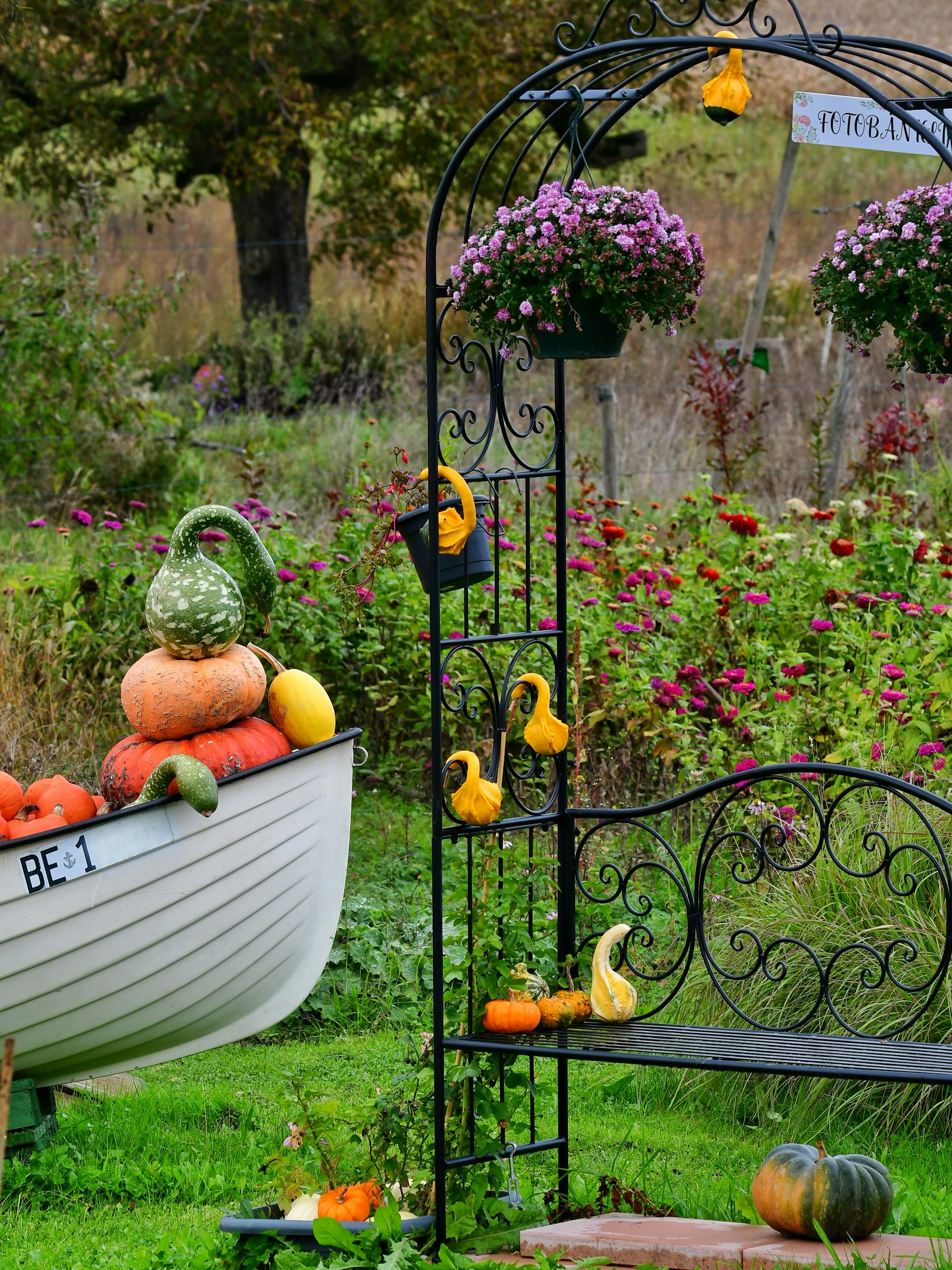
Beautiful and Sustainable: Build a Vegetable Garden into Your Landscape
Chances are good that you’ve looked out your window and realized that something’s missing. Maybe the flower beds are pretty enough, but they’re just not quite what you want. Or maybe you’ve got a functional vegetable patch with rows of tomatoes and a tangle of zucchini, but it looks like a utility corridor compared to the rest of your yard. What if you didn’t have to choose between a garden that’s beautiful and one that feeds you? That’s the whole idea behind working a vegetable garden into your landscape.
The Potager
Long before Pinterest boards and landscape designers, French gardeners were perfecting something called the potager. It’s basically a kitchen garden designed to be as beautiful as it is productive. The great potager at Villandry is still one of the most stunning gardens in the world, and it’s filled entirely with vegetables, herbs, and edible flowers arranged in intricate geometric patterns.
Start with What You’ve Got
Before you start planning, take a long look at your yard. Ornamental vegetable gardens need the same things regular vegetable gardens do: at least six hours of direct sunlight daily and well-drained, rich soil. That said, once you’ve identified your sunny spots, you’ve got more flexibility than you might think.
You don’t have to carve out a big, dedicated plot in the middle of your lawn. One of the best things about this approach is that you can intersperse edibles into spaces you’re already landscaping. Think about adding kale to your flower border or lining a walkway with alternating basil and marigolds.
Choose Plants That Pull Double Duty
This is where it gets fun. The produce aisle isn’t exactly known for its design sensibility, but your seed catalog absolutely is. There are edible varieties out there that are stunning, and adding them can take your garden from functional to beautiful.
- ‘Bright Lights’ Swiss chard, for example, looks like something from a florist’s shop. Its stems come in electric yellow, orange, pink, and red.
- Purple basil adds deep, moody contrast next to silvery herbs or pale green lettuces.
- Lacinato kale brings a dark architectural texture that holds its own next to ornamental grasses.
- Compact pepper and tomato varieties add vertical interest and seasonal color.
Bring in the Flowers
While it’s natural to focus on veggies, don’t skip the actual flowers.
- Nasturtiums, marigolds, cosmos, and zinnias are all at home in a vegetable bed. They attract pollinators, which means better fruit set on your tomatoes and squash. Some of them are even edible (nasturtiums, for instance).
- Marigolds deter certain pests, so you’re adding pest management with something that looks like a cottage garden.
Go for flowers that love full sun and well-drained soil. They’ll be happy in the same conditions your vegetables need, and you won’t be fighting your site’s conditions.
Design Like You Mean It
While adding veggies to your existing landscape is relatively easy, there is a mind shift here. You have to stop planting them in rows. Yes, they’re great for a farm, but they’re not doing your landscaping any favors. Instead, think about planting vegetables the same way you’d plant a perennial border.
Play with angles. Mix heights. Put something tall and feathery (fennel is perfect for this) next to something dense and low. Use a coarse-textured plant like kale or chard, then soften it with something delicate, like herbs or cosmos. Contrast is what creates visual interest.
The edges of your plantings matter, too. A vegetable bed with a crisp, clean edge looks well planned. Add a low border of clipped herbs, a neat row of dwarf marigolds, or even a simple metal edging strip, and you take things up a notch.
Trellises, obelisks, decorative planters, and archways do double duty: they give climbing plants somewhere to go, and they add structural interest. For example, a bean-covered arch over a garden path is beautiful, and it takes about 20 minutes to set up.
It’s Not Too Late for a Summer Garden
Worried that you’ve missed the window? There’s good news: you’ve still got time. If you’ve been thinking about starting a vegetable garden but haven’t made the leap yet, this is your moment. Summer crops go in now, and with the right start, you’ll be harvesting well into fall.
If the idea of building and preparing raised beds from scratch feels like too much to take on right now, we’ve got you covered. At Stoney Creek Farm, we offer garden plot rentals that give you a ready-to-plant space without the setup headache. Our medium plots (10′ x 20′) rent for $150 for the season, and our large plots (20′ x 30′) are $185, both running from now through October 31st.
Each rental includes access to rainwater capture, tools, and fencing. We also provide a Gardening 101 video to get you started, and we’re right here on the farm when you have questions, so you’re not on your own.
For a rental plot, you can absolutely apply all the ornamental principles we’ve talked about here. Who says a rental garden can’t be beautiful? Bring your ‘Bright Lights’ chard and your marigolds and train your cucumbers up the fence. Make it yours.
It’s Time to Get Growing
An ornamental vegetable garden goes so far beyond being a simple design choice. It’s a different way of thinking about your outdoor space. It shows that a yard can be productive and beautiful at the same time (and that veggies can be as gorgeous as roses any day). It also shows that sustainability and style aren’t in conflict.
We think about food and land that way here at Stoney Creek Farm. The garden has always been the heart of this place, not just because of what it produces, but because of what it means to tend something and share what comes from it.
Ready to get your hands in the soil? Check out our garden rental options or give us a call at (615) 591-0015.