Foraging 101: Your Guide to Safe, Ethical, Legal Harvesting
Foraging for your own food is freeing and can connect you more deeply with Mother Earth. You step off the usual path (literally) and start noticing what the landscape has been offering all along. You might spot tender greens pushing up after rain, berries ripening at the edge of a field, mushrooms popping up on rotting logs or stumps, or nuts dropping in the fall. However, foraging doesn’t just mean getting “free food.” Done well, it’s an important skill that can help lead all of us to a more sustainable future: part plant identification, part land stewardship, part common sense.
Never foraged before? Don’t worry. Here’s a beginner-friendly guide to what foraging is, why you might try it, what you can find in our region, and rules that keep you (and the land) safe.
What Is Foraging?
Foraging is what our ancestors did to eat: gathering food and medicines that grow wild all around us. Think berries, nuts, tender greens, mushrooms, and herbs.
It’s also a way of building a relationship with the world around you (the specific place where you live). The more you learn about the plants that share your little corner of the planet, the more you start seeing where they thrive and what they look like from season to season.
Why You Should Consider Foraging
Foraging can be a lot of things at once:
- A way to seasonally reset your eating/food habits. If you want to practice seasonal eating, there’s no better way than foraging.
- A skill that helps you live more resiliently and sustainably. Even basic plant knowledge helps you become more connected outdoors.
- A reason to get outside and be present in this moment. You have to be attentive and pay attention to forage.
- A way to expand your gardening efforts. Many “wild” flavors can also be cultivated once you know what you love and what grows well where you live.
What You Can Find While Foraging In Tennessee
What you can forage (and when) varies a lot depending on where you live. Middle Tennessee offers a surprisingly wide pantry depending on season, weather, and habitat/geographic location. A few beginner-friendly categories include:
- Fruits & berries: Blackberries, blueberries, pawpaws, persimmons, and wild grapes (muscadines) in some areas
- Nuts: Walnuts and hickory nuts are two favorites used by both Native Americans and settlers
- Tender greens: Chickweed, wild onions, wood sorrel, and other early-season greens
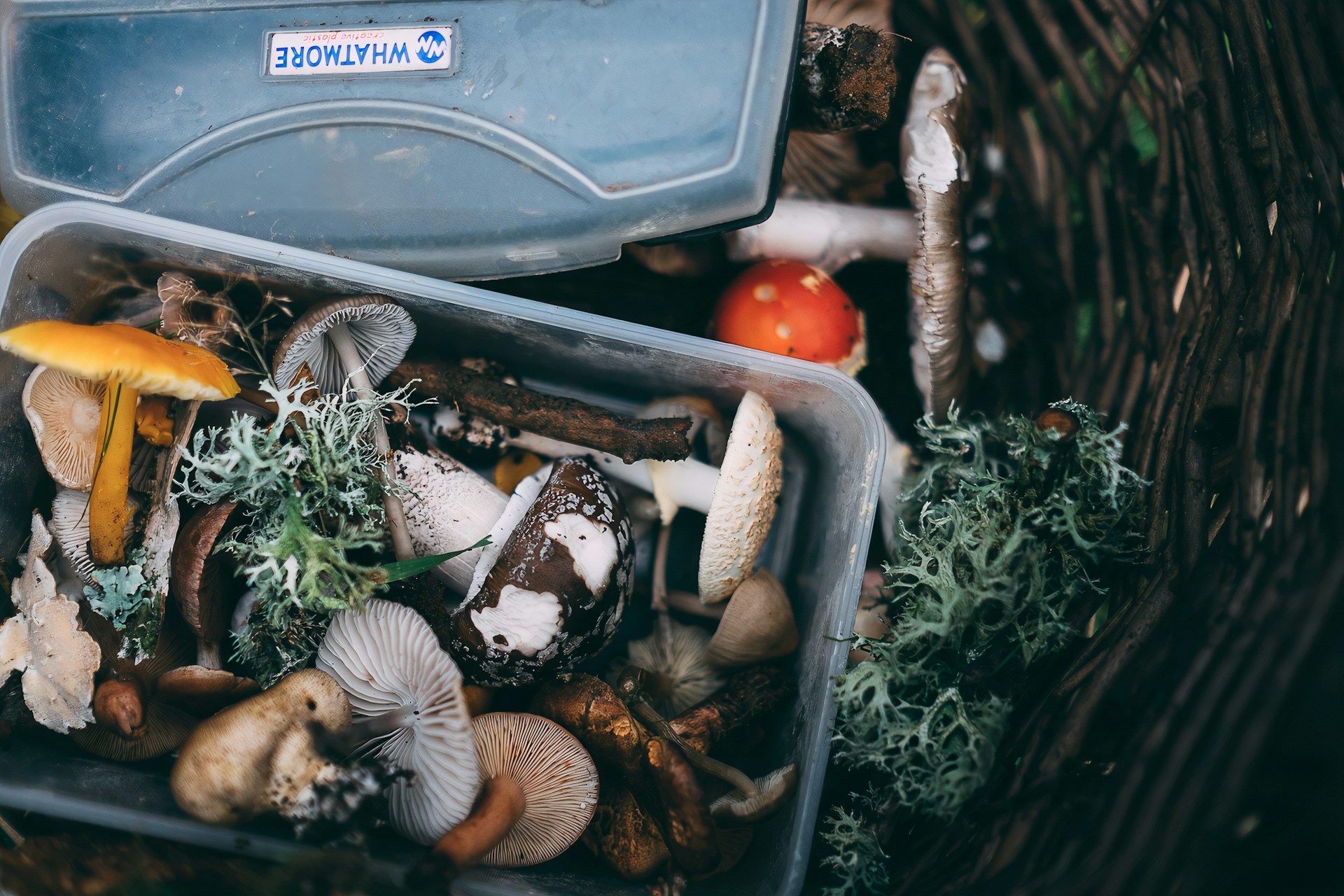
- Mushrooms: Mushrooms are everywhere, but they’re not great for beginners without hands-on guidance
Quick tip: If you’re new, start with things that are most familiar and easiest to identify, like blackberries or blueberries.
A Handful of Rules
It’s easy to think of foraging as anarchic, and it can be (in the traditional sense of self-governance), but there are some rules you need to follow. If you remember nothing else, remember this: misidentification is the biggest risk in foraging, and some edible plants have toxic lookalikes.
Here are the safety basics that experienced foragers follow:
Never Eat Anything You Can’t Identify with 100% Certainty
Use multiple sources (field guide + reputable site + local expert), and don’t rely on one photo match. It’s always best to learn in person, too.
Be Extra Cautious with Mushrooms
Mushrooms are famous for dangerous lookalikes. If you want to learn them, do it the safest way, with a local class, an experienced mentor, and lots of practice.
Avoid Polluted or Sprayed Areas
Skip roadsides, industrial edges, railroad corridors, and areas that may have been treated with herbicides or pesticides. Plants can absorb contaminants from their environment.
Start Small
Even edible plants can cause reactions in some people. Try a tiny amount the first time and pay attention.
Ethical Foraging
A good forager is ethical and thinks about stewardship.
- Leave more than you take. A common guideline is harvesting only a portion of what you find, so the patch can recover (and so wildlife still has food).
- Don’t trample the habitat. Stay mindful of sensitive plants, soil compaction, and creekbanks.
- Be cautious with rare or slow-growing species. Some plants take years to establish, and overharvesting can wipe out a stand quickly.
- Invasives are complicated. Some invasive plants are edible, and in some contexts, removal can help, but only if you’re sure you’re allowed to harvest there and sure of the ID.
Where You Can (and Can’t) Forage: Public Land vs. Private Land
Always check the rules before you pick and know where you’re allowed to harvest.
Private Property
If it’s not yours, you need permission, full stop. If you do own the land, then you can harvest what you want when you want, although it’s still important to harvest with wildlife in mind.
State and National Parks, Forests, and More
Rules differ across parks, natural areas, forests, and the rest. In some places, you can forage small amounts. In others, it’s hands-off unless you have a permit. To avoid legal trouble, know the rules that apply where you’re thinking about foraging and follow them. Any government land (state parks, national forests, national parks, etc.) will have a land manager you can ask for guidance.
A Simple Beginner Foraging Kit
Can’t wait to get started? You don’t need fancy gear, but a few basics help:
- Small scissors or pruners (to avoid tearing plants)
- Paper bags or breathable containers (never plastic)
- Gloves (nettles and thorny brambles are real)
- A notebook or notes app for “where/when” tracking
- A reliable field guide for your region
Learn Foraging Hands-On
If you want to build confidence faster, learn with other people. Guided walks with experts help you understand lookalikes, habitats where things grow, and how to do “do no harm” harvesting in a way that reading alone can’t.
If you’re local to Middle Tennessee, we host events that can help you deepen your skills in foraging and sustainable living at Stoney Creek Farm. If you’re within 30 miles of Franklin, TN, and craving a more hands-on connection to growing food (not just finding it), renting a garden plot with us can be a natural next step, too.